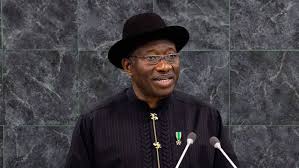
On March 31, 2015, at approximately 5:00 AM, former President Goodluck Ebele Jonathan made a phone call that shook Nigeria to its core — not with thunder, but with grace. He called General Muhammadu Buhari, congratulated him, and conceded defeat. No courts. No violence. No conspiracy theories. Just democracy working as intended.
That phone call was not just a gesture. It was a seismic shift in Nigerian political culture — one that, nearly a decade later, analysts, historians and democratic reformers still point to as the single most important democratic act in the country’s post-military history.
Who Is Goodluck Jonathan?
Born on November 20, 1957, in Otueke, Bayelsa State, Goodluck Ebele Jonathan’s rise to the pinnacle of Nigerian power is one of the most remarkable stories in the country’s political history. The son of a canoe maker, Jonathan attended the University of Port Harcourt where he earned a Bachelor’s degree in Zoology and later a Ph.D. in Hydrobiology and Fisheries Biology.
His path to the presidency was not one he planned. He became governor of Bayelsa State in 2005, vice-presidential candidate in 2007, and found himself ascending to the presidency in 2010 following the death of President Umaru Musa Yar’Adua — a constitutional transition that itself was fraught with controversy and uncertainty.
The Transformation President
Jonathan’s presidency from 2010 to 2015 remains deeply contested. His critics point to the catastrophic mismanagement of Nigeria’s oil boom years, the rise of Boko Haram and the government’s slow response, the Chibok schoolgirls kidnapping, and pervasive corruption allegations including the infamous alleged theft of $20 billion in NNPC revenues raised by former CBN Governor Sanusi Lamido Sanusi.
Yet his defenders — and they are many — point to a different record. Under Jonathan, Nigeria’s GDP grew to over $500 billion, briefly making it the largest economy in Africa. He oversaw the landmark elections of 2011, recognized by international observers as among the most credible in Nigerian history. He deregulated the downstream petroleum sector, completed the privatization of the power sector, and launched transformative policies in education including the almajiri schools program.
The 2015 Concession: Africa’s Democratic Moment
But nothing Jonathan did in office — for better or worse — has had as lasting an impact as what he did after office.
When the 2015 election results began coming in and it became clear that APC’s Muhammadu Buhari was ahead, every expectation built up by Nigerian political culture said Jonathan would fight. The incumbent would dispute the results. He would send loyalists to the courts. He would stoke ethnic tensions in the Niger Delta. He would do what Nigerian politicians did.
He didn’t.
Instead, Goodluck Jonathan became only the second incumbent president in sub-Saharan African history to peacefully concede electoral defeat. The African Union, the United Nations, the United States, and the United Kingdom all praised the concession as a watershed moment for African democracy. US Secretary of State John Kerry called Jonathan personally to commend the decision.
The question, of course, is what motivated it. Jonathan himself has said it was simple: “My ambition is not worth the blood of any Nigerian.” Whether one believes that or views it as a calculated pragmatic decision informed by military and international pressure, the outcome was the same. Nigerians did not die. Power transferred. Democracy survived.
Jonathan in the Post-Presidency Era
Since leaving Aso Rock, Jonathan has been anything but idle. He has served as a respected election observer across Africa, mediating crises in The Gambia, Madagascar, and most prominently as the lead mediator in the Mali crisis under the ECOWAS framework. His shuttle diplomacy in West Africa has earned international recognition.
He has also remained a spectral presence in Nigerian politics — never quite leaving, never quite returning. His name surfaces in every presidential conversation. In 2019, there were credible reports that APC factions were wooing him to run on their platform. In 2022, ahead of the 2023 elections, Jonathan’s name was again swirling as a potential PDP or third-party candidate before he publicly withdrew from contention.
The 2027 Question
Today, as Nigeria’s political parties begin their maneuvering ahead of 2027, Jonathan’s name is once again in circulation. Multiple political groups — including some within the ADC — have been quietly courting the former president, arguing that his national appeal, international credibility, and brand of conciliatory politics is exactly what a fractured Nigeria needs.
Jonathan himself has not declared any presidential ambition. But neither has he issued the categorical denials that would fully close the door.
What is certain is this: at 68, Goodluck Jonathan remains one of Nigeria’s most consequential living political figures. His legacy is complex, contested, and incomplete. But on that cool March morning in 2015, he did something that still echoes through Nigeria’s democratic memory.
He showed that power could be relinquished without bloodshed. In Nigeria, in Africa, in the world — that is not a small thing.